





STEVE
& BETH
WOOD
Honk, Five Summer Stories,
and the long road to
the place where they belong.
In their own words·13 min read
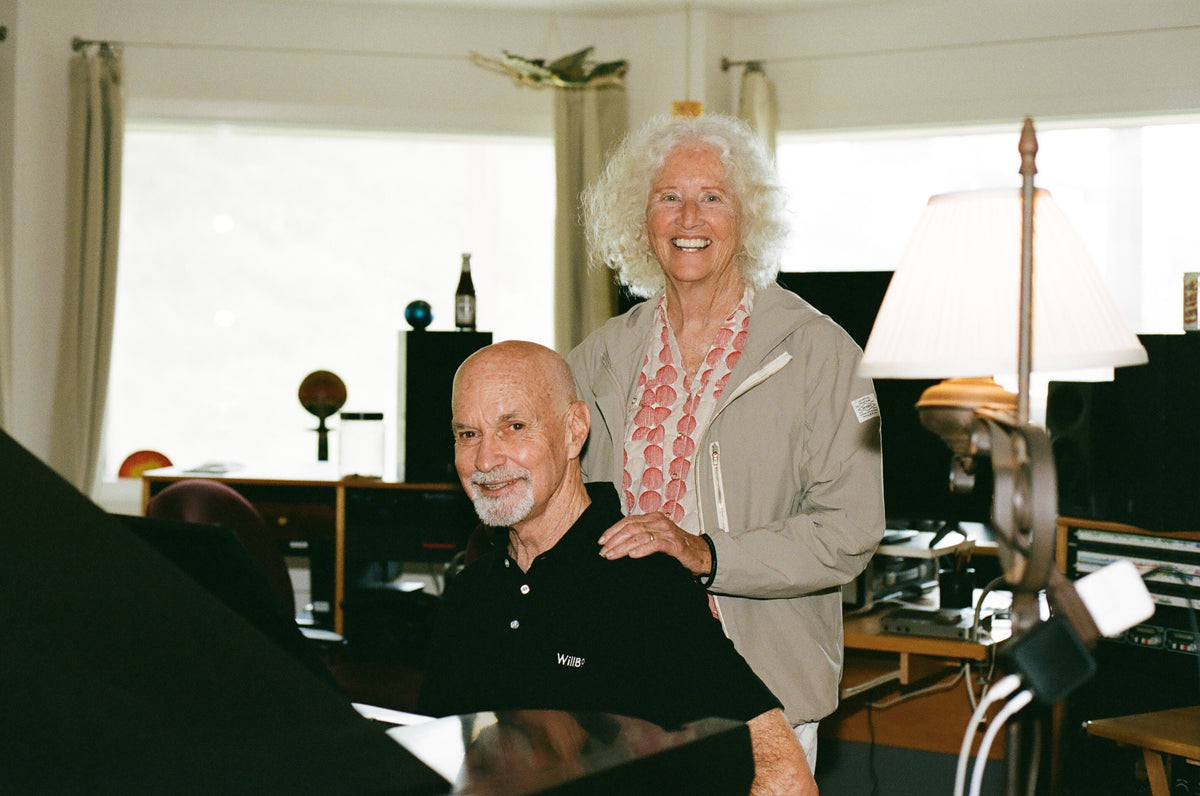
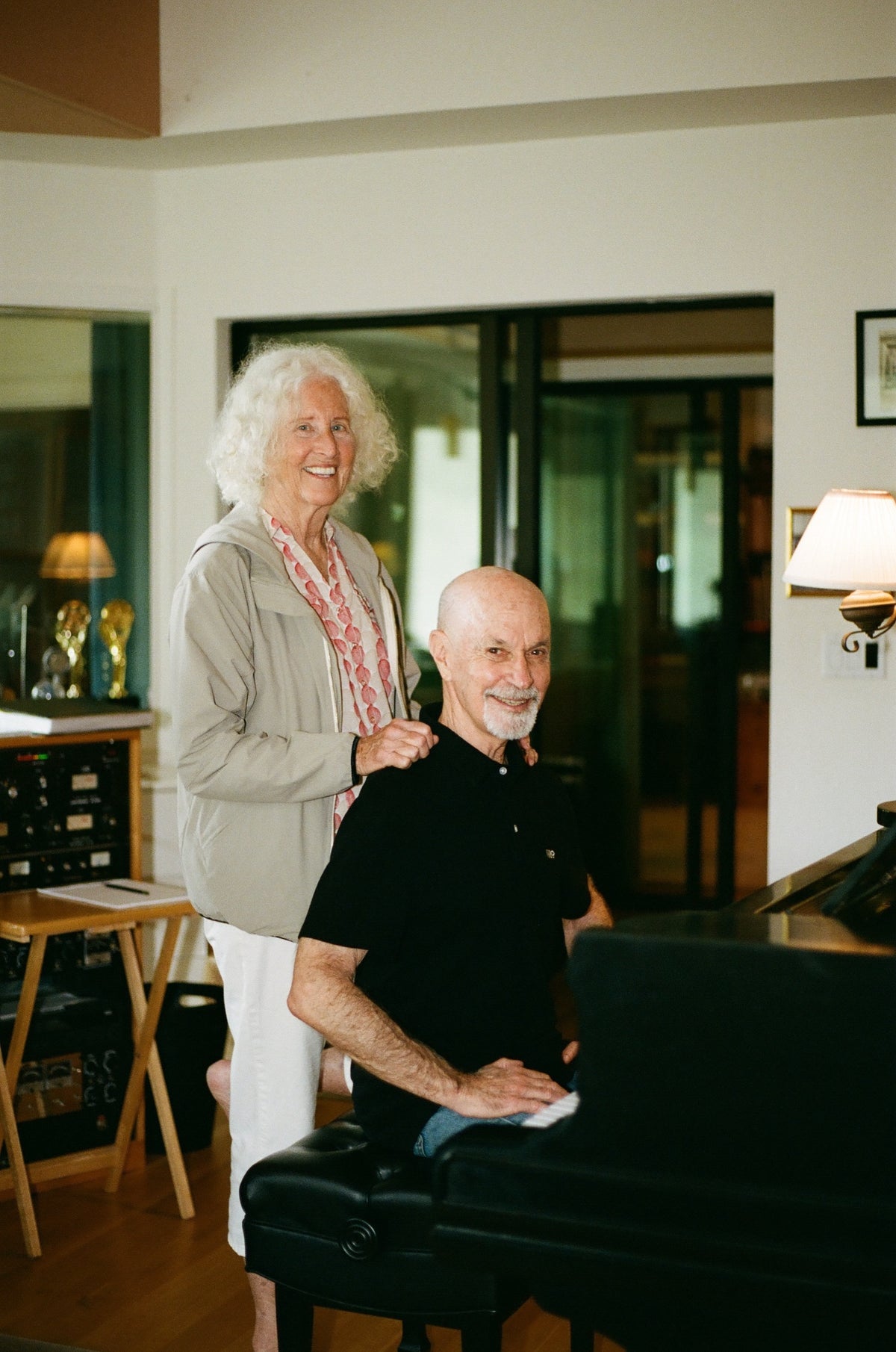
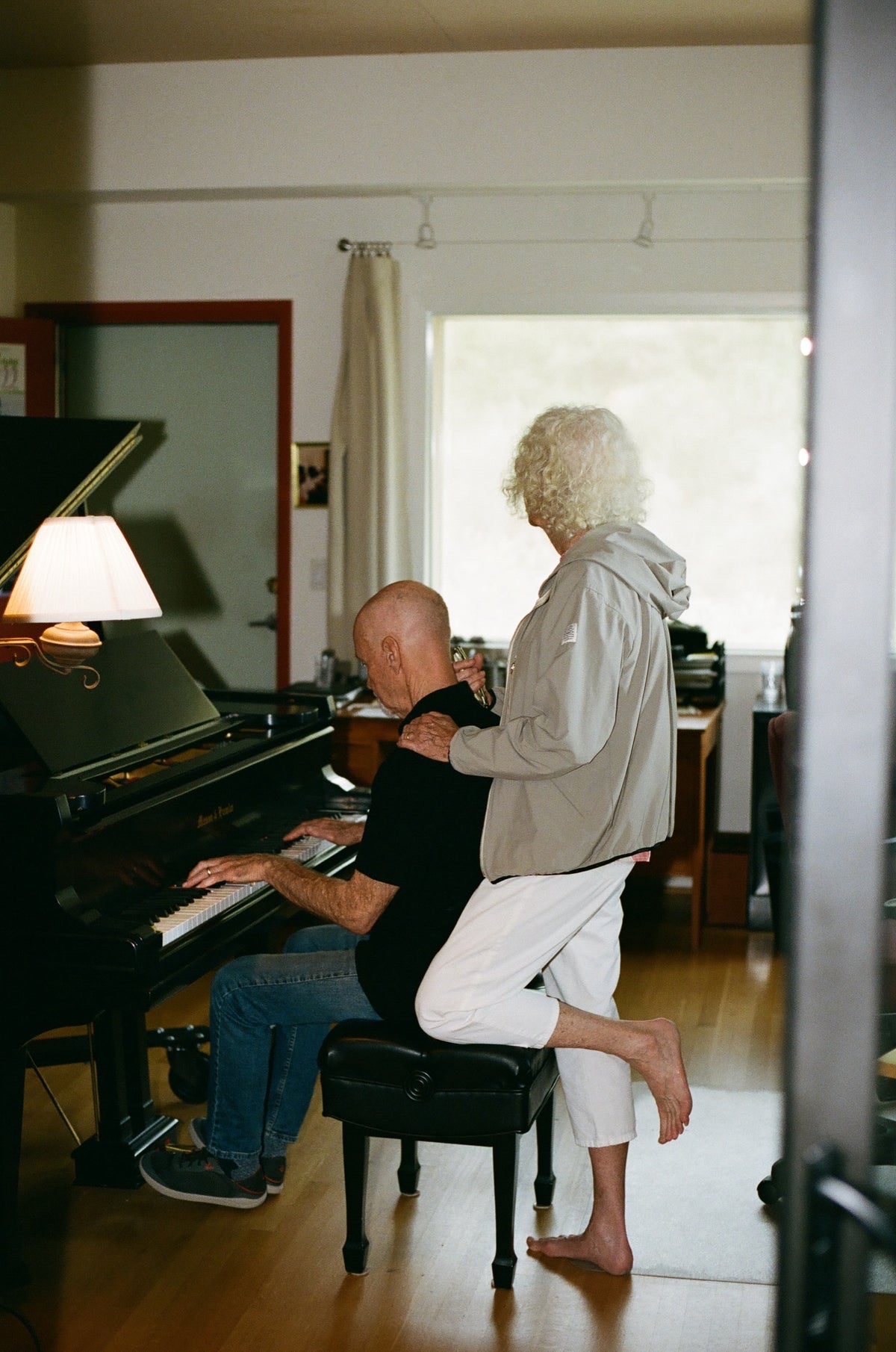
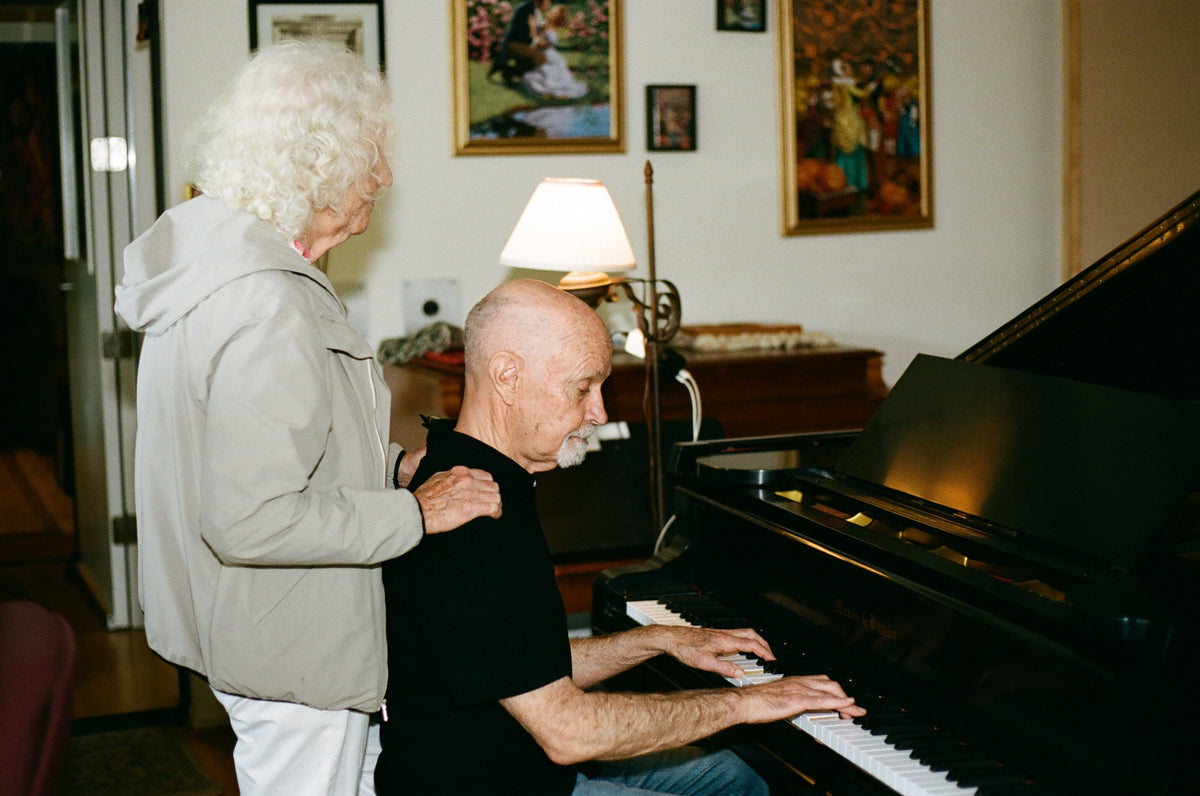
Steve and Beth Wood at home. Photographed on 35mm for Willbo.
A note from Robbie
Some bands give you a few songs you love. Honk gave me the soundtrack to growing up.
I was raised on Steve and Beth Wood’s music, and some of my favorite memories are of trips with them to the Cojo-Jalama Ranch. We’d surf all day, and after dinner we’d gather around the fire while Steve and Beth played. Salt still in our hair, the whole camp quiet, just their voices and a guitar under the stars. It was the sound of my adolescence.
Their band, Honk, scored Five Summer Stories, one of the greatest surf films of all time. But to me, they’ve always been more than a legendary band. Today we’re very close, and I still make a point of being at their shows whenever I can.
Here are their stories, in their own words. I adore them both.
— Robbie
Steve “Woody” Wood
How does anyone get to live in a place where they truly belong? So much of the history of the world is about that search, an epic quest for a land where a soul resonates in harmony with the ever-changing pitch of time and place.
I
PHOENIX
My great-great-grandfather was a Confederate soldier who farmed the rocky land of eastern Tennessee. Just after the war, he decided that land could not support his family. They packed their few belongings into two wagons and headed west in search of open space and opportunity, eventually arriving in Phoenix, Arizona. Life there was hot, dusty, and bug-ridden, but they made a go of it and thrived, working to make the land the place they wanted it to be.
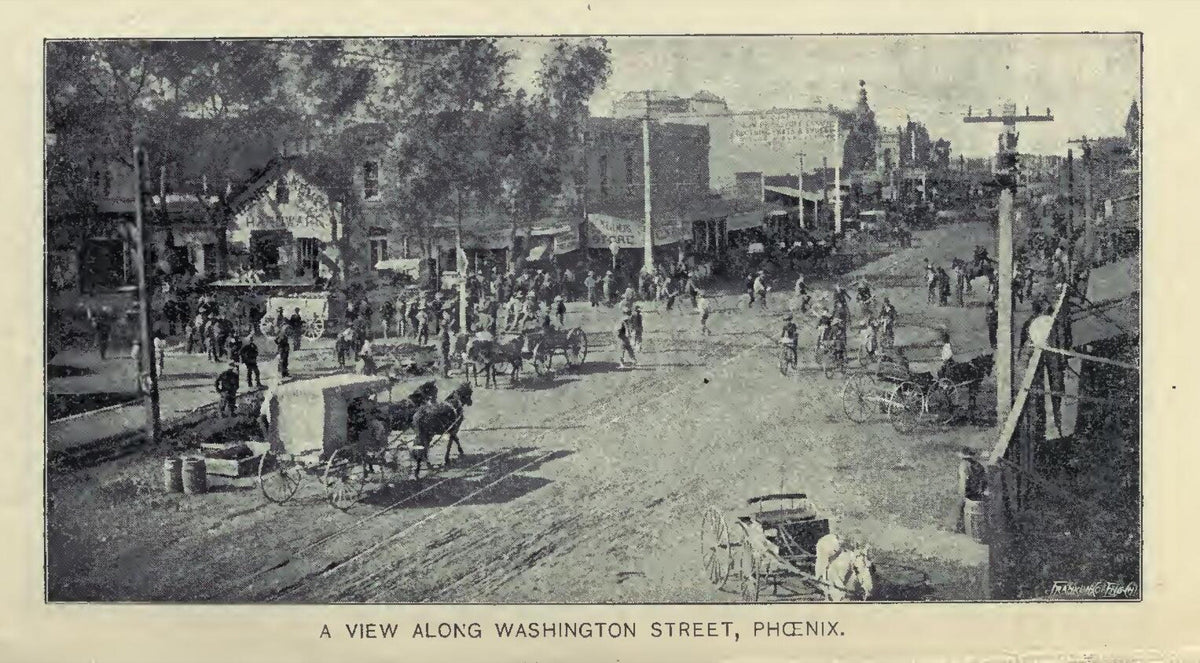
Our family spent several generations in Phoenix. My father, Jim, was a child phenom jazz pianist, playing in bars at the age of sixteen, and my mother was gifted in arts and crafts, embracing the Mexican and Native American cultures that surrounded us. A break in family tradition came when the song of the Pacific called to them across the desert. They weren’t looking for financial opportunity. They were looking for a place where they could explore the new ideas that always live at the burning edge of a culture. Not long after my mother went into labor with me, during a Duke Ellington concert, they made their way to Los Angeles.
II
LAGUNA, 1957
My father became an avid free diver and bodysurfer, and every weekend he took us to a different beach, from Hollywood-by-the-Sea to Del Mar. Then, in 1957, we pulled into Laguna Beach in our brand-new sunroof VW, and that was the end of the exploring. The overwhelming beauty of the place, the abundant sea life (every diver carried an abalone iron on his belt), and the thriving arts community were everything my parents had dreamed of. Every weekend, sometimes after school, and for two heavenly weeks each summer, we drove down the two-lane Santa Ana Freeway from L.A. to the place where we belonged.
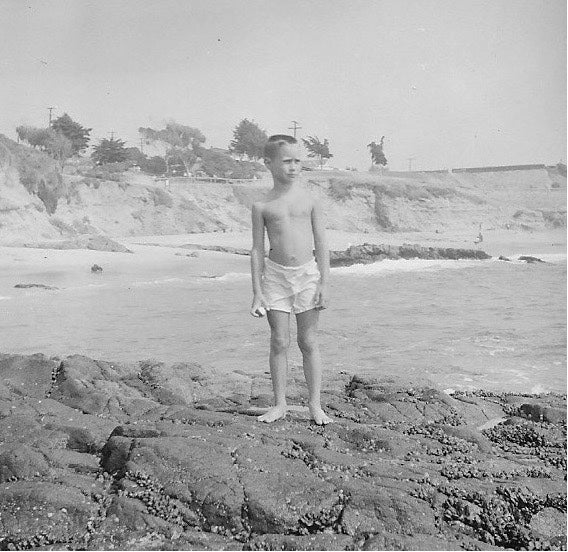
Oh, how I wanted to belong. My bedroom in L.A. was covered in surf movie posters and 8x10s of Phil Edwards, Mickey Dora, Pat Curren, and all the guys in the surf movies I devoured at every opportunity. I read every surf magazine cover to cover and could tell you what beach you were looking at just from the shape of the wave. Every mud puddle was a potential surf break, and I studied the little points and reefs that might shape how a wave would break there. At dances at the community center, which often featured surf bands, I didn’t dance. I stood off to the side and watched the older guys play music that spoke to my dream of being a waterman.
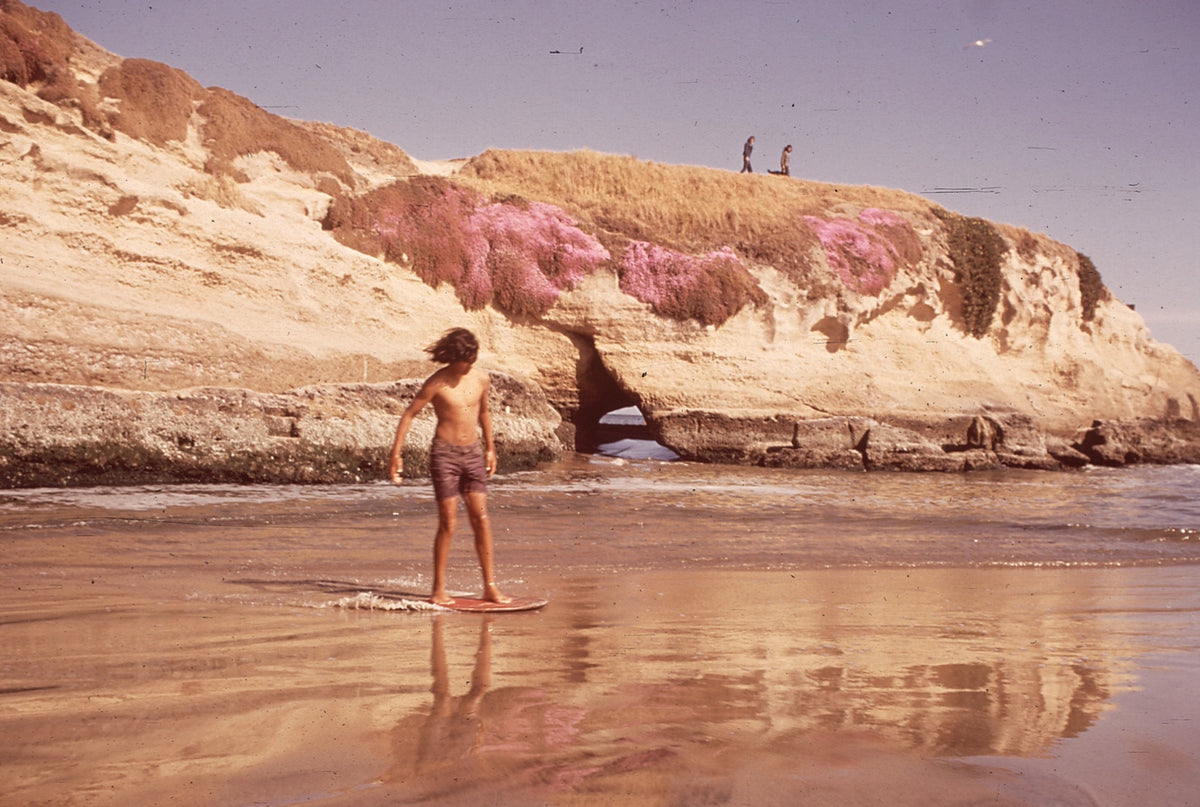
In Laguna I skimboarded on homemade plywood discs, dragging a hand in the sand to send myself spinning and flipping when I reached an incoming wave. I rode the canvas-and-rubber surf mats of the day until my knees and chest were rubbed raw. I befriended the lifeguards, who let me be an unofficial junior guard, taking down the names and addresses of rescued tourists. And how I looked down on those ghostly white tourists who didn’t belong in my Laguna. Deep down, of course, I knew I was a tourist too, no matter how hard I tried to fit in. My dream, and my parents’ dream, was to truly be a local.
My dream, and my parents’ dream,
was to truly be a local.
III
38TH STREET
Finally, in the early ’60s, my father bought a new duplex on 38th Street in Newport Beach, and we were locals. Not quite Laguna, but good enough! I had a whole new crew of beach friends. We surfed all day, made sand angels in the warm sand, and went tanned head to toe with sun-bleached hair. Parents weren’t afraid to let their kids roam free back then, and the beach and the ocean were ours for endless adventure.
It was the perfect life, until President Kennedy was assassinated and my father was transferred to Dallas to work on the Warren investigation. Just before my mother and I were to join him in 1964, the Beatles put the first tiny dent in all things surfing. My girlfriend and I got tickets to a sneak preview of A Hard Day’s Night at the Port Theatre in Corona del Mar, and when she stood and screamed “Paul!” for the first forty-five minutes, I walked home without her. Something had definitely shifted in my world.
IV
DALLAS, 1964
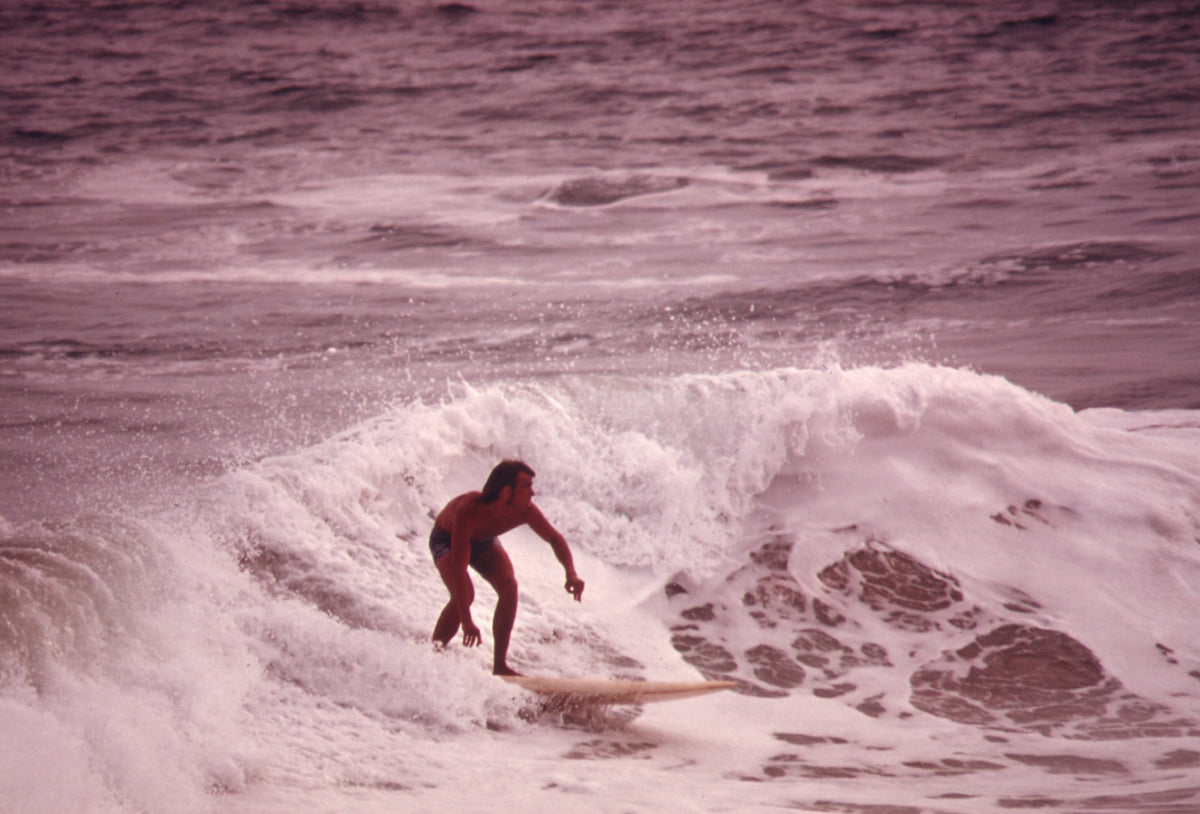
Dallas in 1964 was a lonely town for the only surfer boy around. My grandmother gave me $150 in mercy money, and I bought an electric guitar at Sears, found a kid in my geometry class who played a little, and soon we had a band. California never left my heart, but I fell in love with music, exploring the sounds of the Beatles, the Animals, Jimmy Reed, and Otis Redding. When we finally moved back to Newport Beach in 1967, I thought I was a surfer who played music. But the new shortboards were changing the sport so fast, and I was spending so much time with my new band, that I became a musician who surfed.
I became a musician
who surfed.
V
LAGUNA, 1969
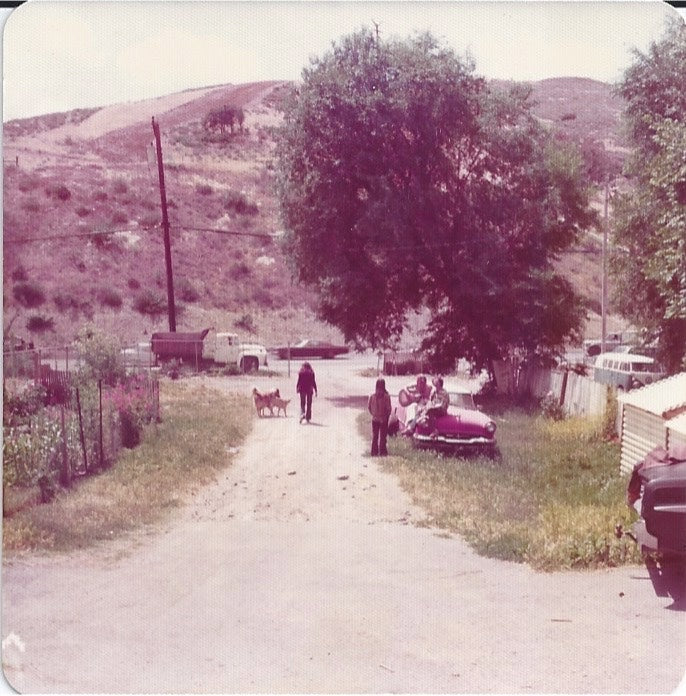
After several semesters at Cal State Long Beach, changing majors and trying to focus on things I didn’t want to do, I dove headfirst into the deep end. It was 1969, the year the floods in the canyon chased away the fainter of heart, and a tiny two-bedroom apartment in Laguna was mine for $75 a month. I was earning $25 a night playing music, and just like that, I had made it to the promised land.
I suspect this breakaway time of life is magical for almost everyone. I also suspect that this particular time and place had more magic than most. A real revolution in outlook was underway. We were the beneficiaries of the peace that followed years of struggle, from the Depression through a world war that had devastated most of the globe. We were spoiled, I suppose. John Adams once wrote that he studied politics and war so that his sons could study mathematics and philosophy, and their children could study poetry and music. We were the poets, in a time when people wanted poetry.
We were the poets, in a time
when people wanted poetry.
Laguna was relaxed and relatively isolated, a liberal fortress with one of the most conservative counties in America just beyond the hills and farms. It drew more than its share of hippies and artists, and the live-and-let-live attitude of the locals made it a perfect place to look at the world in new ways. Forest Avenue, the main street, was a typical American main street, except for the beautiful blue Pacific at one end. It had a stationery and book store, a shoe store, a hardware store, a bakery with a soda fountain, a paint store, a pharmacy, a lumberyard. You get the idea. The tempo was slow. I love Amazon Prime as much as anybody, but without the whole world at your fingertips, your sense of what you needed and how much time you had was wonderfully relaxed.
VI
HONK
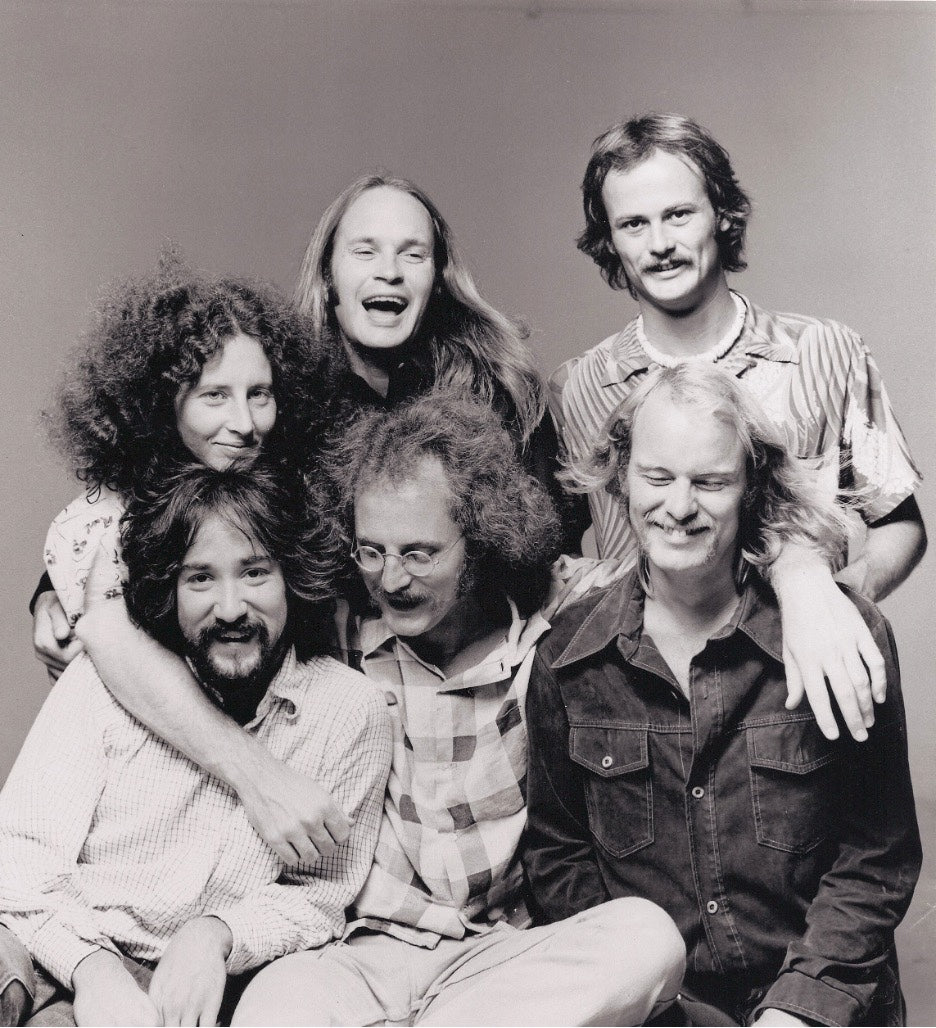
I soon formed a band called Honk with the best and most serious players I knew. We vowed to play original music and never be a cover band. We set up in my neighbor’s living room on the top floor of our rickety hobbit house, made mostly of windows and perched high in the trees, and practiced steadily, building a repertoire of music we loved and believed in. We played bars in and around Laguna, mostly the Orphanage, which sat directly across the street from the most renowned drug market in town, the Taco Bell. It was the era of love-ins, and we played many a dusty, remote show off the Ortega Highway and on the fringes of the tiny upstart University of California, Irvine. We also played an audition night at the Golden Bear in Huntington Beach. We got the gig, but more importantly, I met Beth Fitchet, who was auditioning that same night. I was a surfer, and she was a girl from the desert. Not my type. But when I heard her sing, my adolescent idea of my type was erased forever. My soulmate soon became part of the band.
When I heard her sing,
my idea of my type
was erased forever.
VII
FIVE SUMMER STORIES
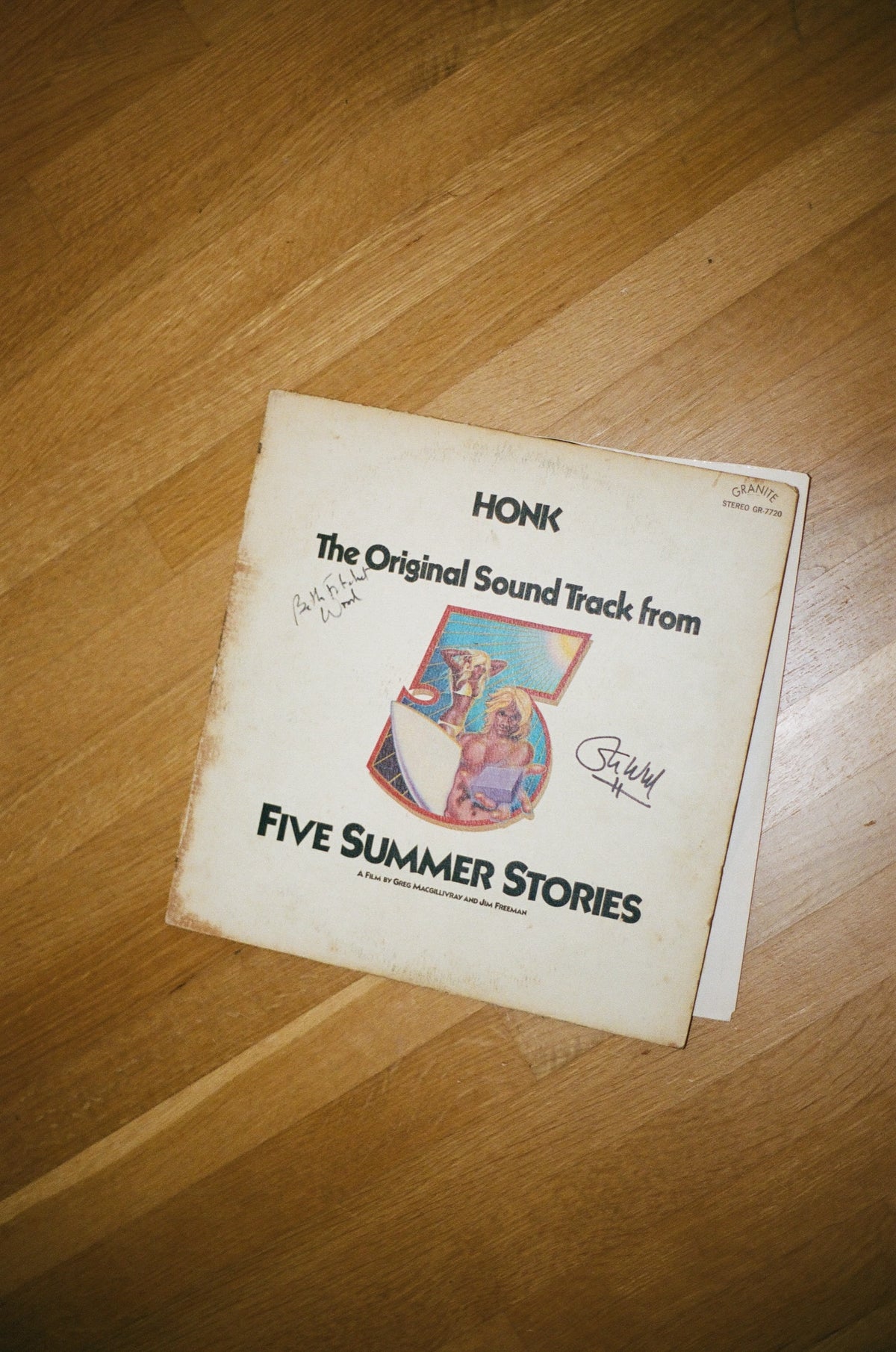
A budding filmmaker and Laguna local named Greg MacGillivray was making a surf film about the new talent, style, equipment, and attitude that were changing the surf world. He and his partner Jim Freeman had already secured the rights to use the Beach Boys’ music, but they wanted custom music from a local Orange County band. We took the job thinking it was something to dash off while we worked on our serious music. The film became the iconic surf film of its generation, and Honk, without meaning to, captured the spirit of the time with our jazzy, folky, country, rocky stew. The film brought us a big fan base and a number one record in Hawaii. That led to a major record deal, management, booking agents, tours across America with the Beach Boys, Loggins and Messina, and Chicago, record executives, and band disagreements about direction now that something other than music was at stake.
There is no simple definition of success. Most people think it has to do with power: money, fame, and a crowd of people who laugh at all your jokes. Getting there usually requires compromising everything else to the god of success. A lucky few seem to manage it without losing touch with their spiritual core. Honk couldn’t balance its musical needs with the demands of the world that came with it, and we had to make a choice.
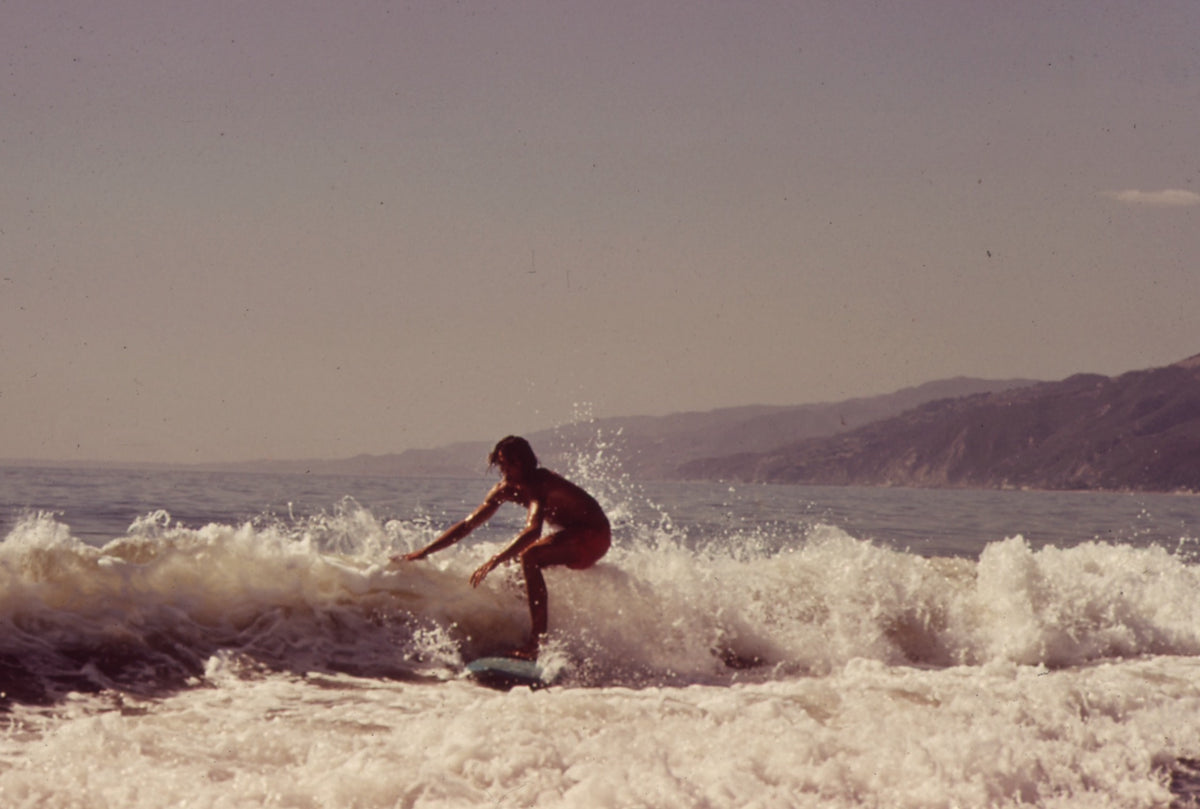
We still play the occasional sold-out reunion concert for a room full of people with our music woven into their DNA. Beth and I still play small venues, mostly our own songs, which keep coming as if the big nugget is always in the next pan. And to this day, when I walk down the street in Laguna Beach and a friend waves as they pass, I still get a thrill and think, I’m a local.

I’m a local.
Beth Wood
Sometimes you move toward something, and sometimes you move away from something. Sometimes you wander around and stumble into something. And sometimes you are called by the memory of a place with infinite possibilities.
I
A LITTLE SLICE OF HEAVEN
I grew up in Phoenix, Arizona. When I was six, my mother decided to take me to California to see Disneyland, which had just opened, and to stay a while in a glorious little town called Laguna Beach. It was my first experience of the ocean, of California, of hilly places, of waves knocking me down and sand in my nose. For years afterward I carried that little slice of heaven around in my head, thinking it was as impossible and unreal as heaven itself. But it was my lodestar. Laguna Beach. That name.
II
MONDAY NIGHTS
I became a musician, and knowing I could never make a life in music in Phoenix, I moved to Los Angeles with three friends, hoping to get something going. We knew not what. In 1969, the second stage of our generation’s musical renaissance was well underway in Hollywood, and I wandered right into the middle of it. We went to as many clubs and heard as much live music as we could afford the gas for. We sang on every stage we could, trying to see where we fit in, looking for music that was good. And we found it.
In those days even the big venues had nights when youngsters like us could try our songs out on audiences and on other musicians, and find our own little communities. The Troubadour was one of those places, on Monday nights. On any given Monday I might see nobodies like Tom Waits, Karla Bonoff, JD Souther, Glenn Frey, and Jackson Browne, and then have to work up the nerve to play my own set on the same stage. Clubs like that insisted on a good listening room, and without that, our efforts would have died on the vine.
This was the time of Watergate, too. We young people were deeply distressed by the corruption of our parents’ generation. After surviving world wars and the Great Depression, for them to fall into that kind of corruption felt like the ultimate betrayal. We wanted to remake humanity based on truth, beauty, righteousness, that sort of thing. Kind of like the impossible dream of Laguna Beach that six-year-old Beth carried in her head.
The quality and sheer quantity of great music in that time and place was a healing balm for the sick old smoggy world we had inherited. All it took to make the magic happen was our certainty that quality was the most important thing. Not style, not money, not even fame. The quality of the music. It was such a youthful, naive attitude. So many of us had turned away from our shell-shocked, war-torn, frightened parents that we didn’t have older role models. We baby boomers owned the world then! We knew we could reinvent it, and we did, right here in California, the perfect place to remake the world.
Not style, not money,
not even fame.
The quality of the music.
III
CRITERION
Back to my story. Jackson Browne’s music was the best, most compelling music I had seen up close, so I went to as many of his shows as I could. The only way I could take his songs home with me was to memorize them. So I learned them and sang them to anyone who would listen. I played them for Bo Goldsen at Criterion Music Publishing, who understood how good they were. He tracked Jackson down, signed him, and set about shopping him to record labels. But the folks at Criterion didn’t care for Jackson’s voice, so they decided to make demos of his songs with other singers. With me.
That is where my whole future began. Criterion hired a band to back me on those demos, a newly formed band from Laguna Beach called Honk. Wow. Laguna Beach! I don’t think any of the demos we made pushed Jackson’s career along at all, but they sure made a difference in mine. Jackson eventually signed his first big deal with Asylum Records through Criterion’s efforts and went on to make his historic mark on our country’s music and social conscience. And I got into a really good rock ’n’ roll band and married a brilliant, cute surfer dude from it. Steve Wood, aka Woody. But that’s a whole other story.
IV
THE LIVING ROOM
The band’s ethos was always driven by quality, as each of us understood it. We didn’t care about style, or what people called us, or what anybody needed for their hit machines. We just wanted to write and play music that moved us. At first I sang background vocals when the band practiced. Then I went to gigs with them. Then I filled in a little on guitar. Oops, and there I was. We practiced in the living room all the time, bringing in whatever caught our fancy, sharing our favorite records, learning tunes straight off the record player or from memory (“Somewhere Over the Rainbow”!). The bachelors in the band would even work up corny a cappella numbers at the laundromat, then have the nerve to perform them in stadiums. Gospel, Ellington, Zorba the Greek on accordion, folk, really good blues. And rock ’n’ roll.
At the time, the follow-your-heart attitude was a given in Laguna Beach. But for us, it wore off after a while, and it threatened to wear off for the town too. We soon felt we had to fight to keep the quality and character of our music, against the audiences who only wanted the fast songs, against the record companies, against all the powers that be. The band didn’t survive that fight entirely, and we broke up. But decades later, we still play sold-out concerts a couple of times a year, and the creative magic shows up every time.
All of this was happening while the character of our hometown was under attack too, it seemed, by the same part of humanity that wants to consume without thought. But in our town, we mostly stood up to those forces, probably because we had reminders all around us of the beautiful, soulful side of life. Going back to that well keeps our best instincts from wasting away. It’s the source of our good luck and our creativity.
And did I mention fun?
Steve went on to spend ten years touring as Kenny Loggins’ musical director and keyboard player. Greg MacGillivray became the largest producer of IMAX documentaries in the world, and Steve has scored around thirty of his films, collaborating with Sting, George Harrison, the Moody Blues, Paul McCartney, Crosby, Stills & Nash, and Dave Matthews Band along the way. He and Beth still call Laguna Beach home.
Steve & Beth